
Rita McGrath’s 2013 book is still relevant
Explore/Exploit tradeoff optimization is a core topic in computer science. How long and with what level of effort/expense should you seek a maximum vs employ what is available.
Traditional product lifecycle pricing assumes you can charge a lot to early adopters assuming they get value your product or service and then as it becomes more available or faces more competition you can lower prices.
New products and services are launched with an expected development pay-back period and total lifespan.
Given the rate of technological and societal change the “exploit” period of new innovation is shortening.
I’ve been talking to Robert Rouse and Shaun Davis about what the Dataiku claim of “future proof” means in practical terms.
Companies are hot to swap out database platforms, compute resources, data viz programs and whatever else they can do to reduce overhead and on-going costs.
Its generally value negative (in the short run) to swap out core business systems because its incremental work, introduces complexity and there’s a learning and adoption curve for the human users of those tools.
Systems which are designed to be flexible are inherently more complex and have more unused features than those which are purpose built and therefore can be more streamlined.
Investment in platform that reduces the cost, complexity and risks of changing your data processes is to some extent hedging your bets for the future.
It’s impossible to know the future and very difficult to plan to be adaptable in the right, cost effective ways to be prepared for it.
Evolution as a biological concept is intergenerational, not instantaneous. Our language for tech evolution may have been borrowed from biology but it reflects the lifespans of bacteria more than humans.
Evolution in nature also exists without individual intent, operating at population levels on the basis of random mutation and inheritance.
I keep thinking about John Menard Keynes saying “in the long run we’re all dead”. He’s arguing that in policy making we need to act now and adapt as we go.
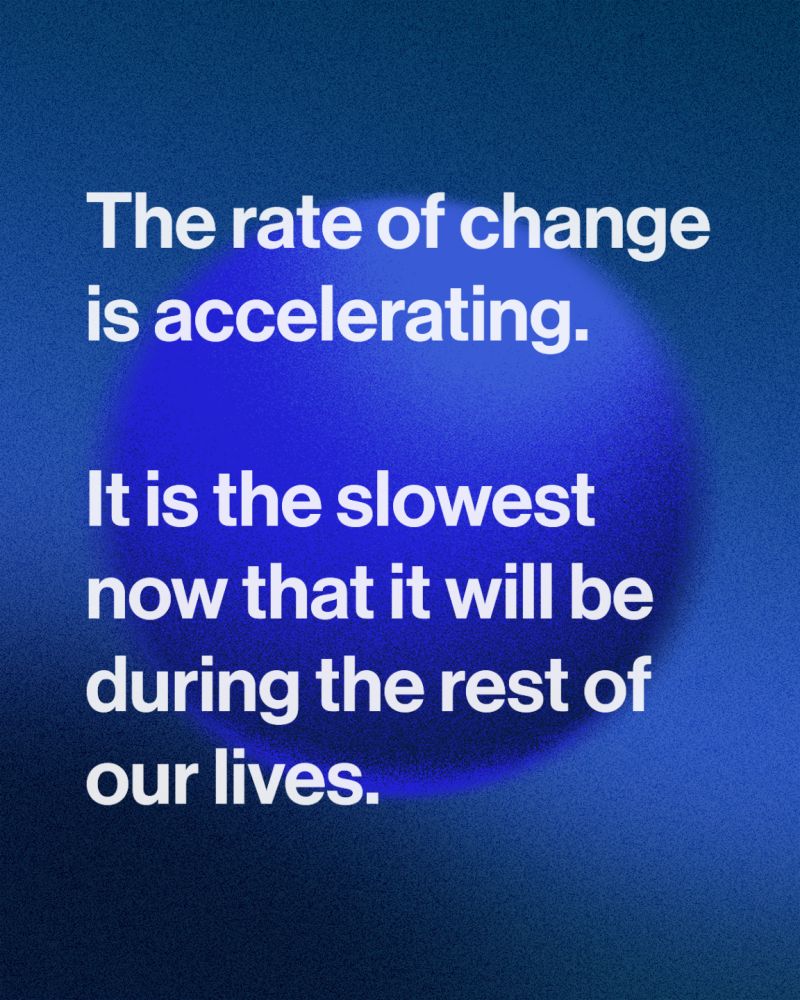
The pace of change is the slowest now that it will be during the rest of our lives.
If we live entirely in the moment we surely sacrifice our seed capital and positioning for the future, but if we don’t manage the present well we (and our companies) won’t survive into the future.
I’m enjoying reading Rita Mcgrath’s 2013 book The End of Competitive Advantage and evaluating how much of it seems relevant a decade later.
The main point is that change is the only constant and so you need to plan to adaptive or expect utter chaos and eventually extinction.
 Carragee Consulting
Leave a comment