
Goodwill Finds business model musings
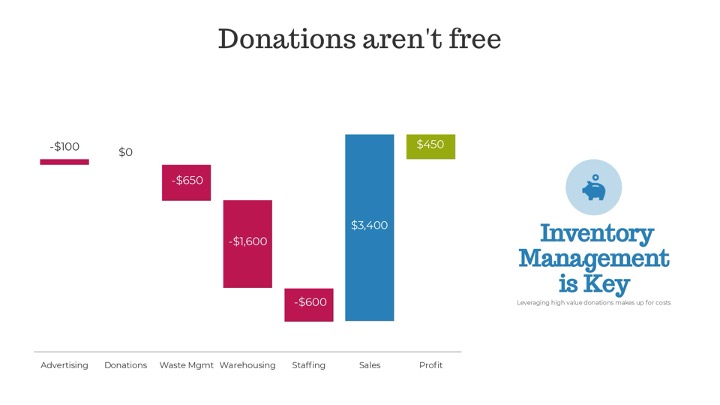
Last year I spoke to a guy who was looking for pricing support for an online version of Goodwill called Goodwill Finds. I called my sister all excited to talk to her about Thrifting and get her perspective as a Seattlite on what opportunities might exist.
The business model is that its a clearing house for regional donations to brick and mortar Goodwill stores. They select out high value brand merchandise and list it for sale online where it has a broader buyer base and can potentially command higher prices.
I probably priced myself out of helping on the project, but I was really excited about the business problems:
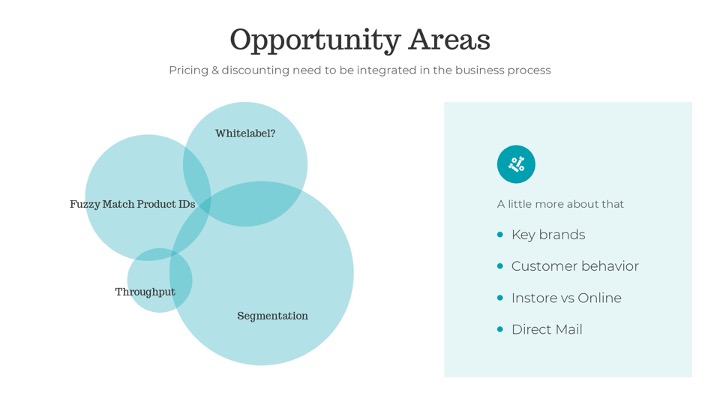
- Stores had no rate card for pricing the products they sent to the online site, so there was no concept of “Value Based Pricing” being consistently applied
- Discounting was focused on inventory turn-over to minimize storage costs and deal with the deluge of donations the store are required to process
- Very little UI/UX design had been done on the site and product images were not showcasing the merchandise to command premium prices
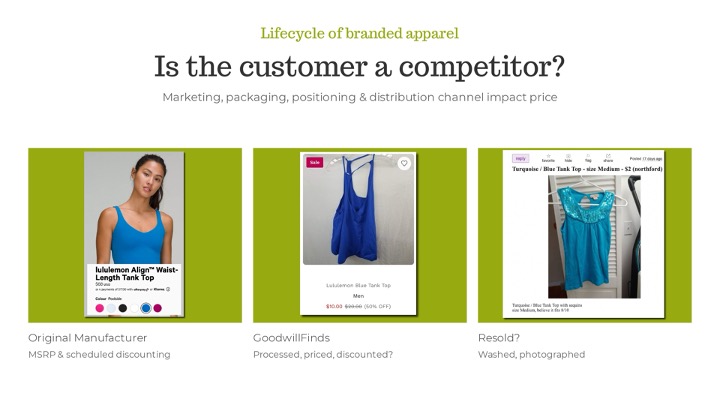
- Customers could act as competitors, and there was no reporting on bulk purchases which were likely being resold (highlighting where pricing was too low)
Somehow this morning I ran into a NY Times article “The Golden Age of Thrifting is Over” about how fast fashion has ruined thrifting because the clothes are poorly made and there are few durable pieces that form the basis of a sophisticated wardrobe being donated.
“Because of the rise of thrifting, what isn’t worn ends up getting donated, Ms. McSherry said. Although it’s a better option than sending clothes straight to a landfill, she said, thoughtless donating can direct lower-quality items to people who really need them, while also driving up thrift stores’ operating costs.”
I think the alternative answer is that they are being syphoned off by intermediaries, including GoodwillFinds – perhaps under the axiom of “if you can’t beat em, join em”.
I came to two conclusions:
- This is another example of success is inherently destabilizing – a concept Morgan Housel introduced me to in his book Same As Ever. The more successful GoodwillFinds is in selecting the high value items from the onsite donations, the less value shoppers can find in stores, in a vicious cycle than can undermine the business model.
- Businesses who are hoarding data like last year’s Zara clothes are paying way too much for storage, cloud computing and management. Let it go – unlike physical inventory you can drop that table, hard deleted and move on with better use of the high value stuff.

 Carragee Consulting
Leave a comment